Choosing siding for a Milwaukee-area property is not simply a matter of picking the material with the lower starting cost. The final scope can change with the building’s size, existing siding, trim, substrate condition, access, drainage details, and the installation plan.
Request a FREE estimate today!
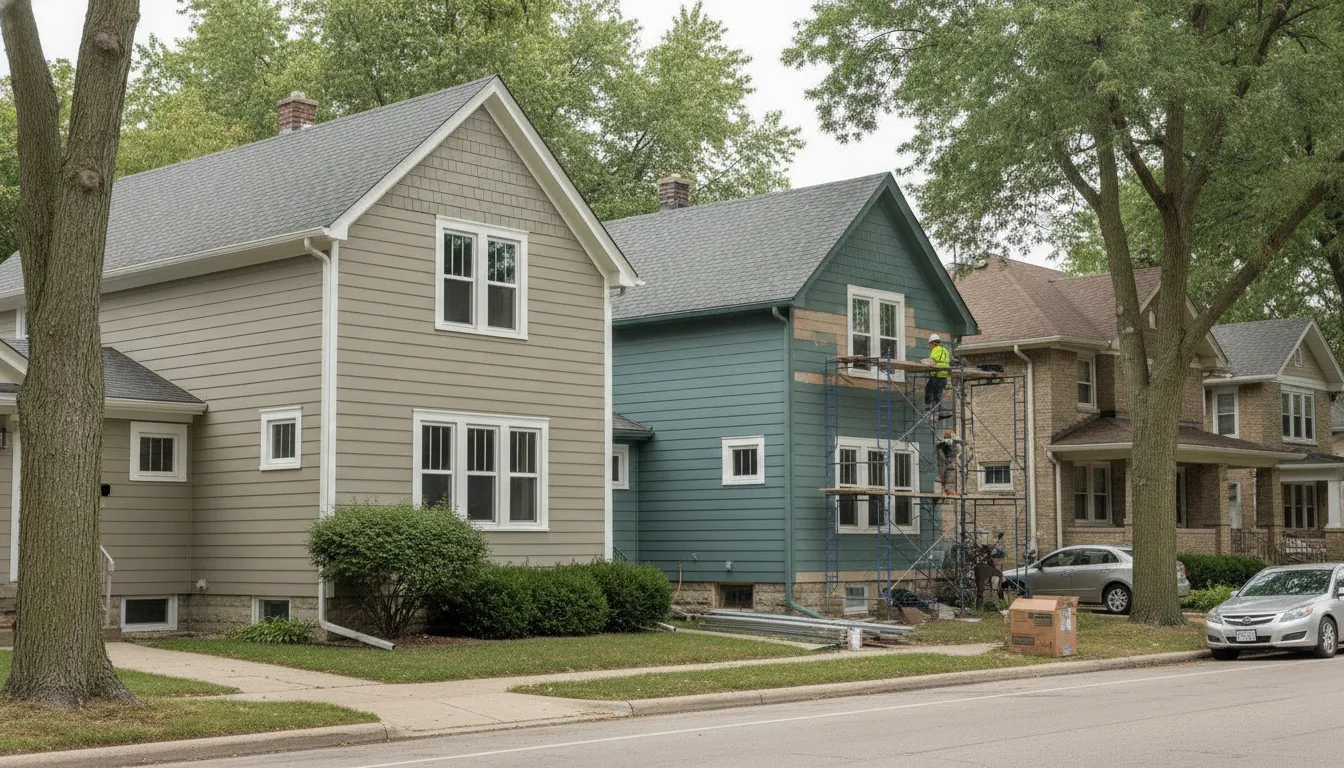
Vinyl siding vs fiber cement cost should be compared through a project-specific estimate, not a universal price claim. Vinyl and fiber cement differ in material, handling, detailing, maintenance, and weather considerations, so the right choice depends on the property and its priorities.
For Milwaukee homes, apartments, and commercial properties, a useful comparison starts by separating the material itself from the work required to install it properly. That makes it easier to understand what a siding estimate actually includes.
What Does Vinyl Siding vs Fiber Cement Cost Actually Include?
A siding estimate is more than a material selection multiplied by wall area. When property owners compare vinyl siding vs fiber cement cost, a universal figure can be misleading because the final scope depends on the building, existing conditions, access, and installation details. The same material can require a very different amount of preparation on one Milwaukee-area property than on another.
A useful estimate should account for the full work involved, including:
- Existing siding removal: Tear-off may include one or more layers of old siding, damaged trim, housewrap, fasteners, and disposal. The condition of the wall underneath cannot be known accurately until the exterior is opened and inspected.
- Substrate preparation: Soft sheathing, water damage, uneven surfaces, or deteriorated framing may need attention before new siding can be installed. Skipping this review can leave the new cladding covering a larger wall problem.
- Trim and detailing: Corners, soffits, fascia, window and door openings, vents, utility penetrations, and transitions between materials all affect the scope. Fiber cement and vinyl also have different handling and installation requirements, so the estimate should identify the selected system rather than treating siding as interchangeable.
- Access and site conditions: Height, landscaping, tight side yards, porches, additions, apartment layouts, and commercial entrances can change staging, protection, and labor needs. A building that looks simple from the street may require careful access planning.
- Water management: Proper detailing around openings, flashing, drainage, and transitions helps the siding shed water without relying on the visible cladding as the wall’s only defense.
For that reason, compare estimates by asking whether they describe preparation and installation, not only the product name. The bid should explain what is included, what conditions could change the scope, and who is responsible for coordinating the work. JM Remodeling uses a design-build approach with one entity responsible for project management and a personalized, detailed bid and timeline. Its in-house crews handle siding work for residential and commercial properties across Milwaukee and Southeastern Wisconsin.
For more context before requesting an estimate, review these Milwaukee siding material options. The right comparison is not simply which product has the lower initial figure. It is whether the proposed material, preparation, detailing, access plan, and labor fit the property and the result you want.
How Vinyl and Fiber Cement Differ in Material and Installation
The material itself affects more than appearance. It influences how the crew handles panels or boards, prepares the wall, cuts around openings, installs trim, and protects the property during the work. Those differences help explain why a useful comparison of vinyl siding vs fiber cement cost must consider installation scope rather than material labels alone.
Composition changes the work plan
Vinyl siding is made from PVC plastic. Its lighter panels can be carried and positioned efficiently, and the system relies on interlocking courses, starter components, corner posts, trim, and carefully placed fasteners. Vinyl also needs room to move as temperatures change. Fasteners should secure the panels without preventing that movement, while corners, windows, doors, and roof lines require compatible trim and deliberate detailing.
Fiber cement is a composite of cement, sand, and cellulose fibers. It has a more substantial, rigid feel than vinyl, so handling, staging, and cutting require a different approach. Boards may need more careful support as they are moved and positioned. Cutting can create dust, which makes site protection, dust control, cleanup, and appropriate safety practices part of the installation plan. The crew must also follow the selected product’s fastening and joint details rather than treating it like a vinyl panel system.
Neither material eliminates the need for a sound substrate. Before new siding is installed, the project may require inspection of the existing wall, removal of damaged material, correction of uneven areas, and attention to sheathing or other conditions that affect fastening. A replacement project can also involve housewrap or water-resistive barriers, flashing at openings, drainage details, and repairs that are not visible from the street. Those conditions can change the labor and sequence for either material.
Trim is another important scope item. A simple wall with few openings is different from a home or commercial elevation with multiple windows, doors, corners, gables, transitions, and penetrations. Fiber cement may call for more involved board joints and finish coordination. Vinyl requires its own complete family of channels and accessories. In both cases, rushed trim work can undermine the finished appearance and the wall’s water-management details.
For Milwaukee-area homes, apartment buildings, and commercial properties, the installation plan should therefore identify access, staging, substrate preparation, dust control, disposal, trim, and flashing before material selection is treated as a final decision. JM Remodeling’s in-house siders and design-build team can coordinate those questions under one project responsibility. JM is VSI and Mastic certified for relevant siding work, without implying that one material is universally better.
Once composition and installation are understood, the next question is how each system’s detailing and material characteristics respond to weather exposure.
Which Siding Handles Milwaukee Weather Better?
Milwaukee-area siding has to perform through freezing winters, snow, wind, hail, rain, and strong seasonal sun. That does not make vinyl or fiber cement an automatic winner. The better choice depends on the wall assembly, exposure, installation details, and how the property will be maintained over time.
Both materials should be evaluated as part of a water-managed exterior system. Siding helps shed rain away from more moisture-sensitive layers in the wall, but the cladding is not a substitute for sound flashing, drainage, and properly detailed transitions. Windows, doors, roof-to-wall intersections, corners, and penetrations deserve particular attention. A material installed well on a properly prepared wall can perform more reliably than a premium product installed over unresolved moisture or substrate problems.
Vinyl can be a practical option when the project calls for a lighter cladding system, efficient installation, and straightforward maintenance. Its performance still depends on correct fastening, movement allowances, trim, and exposure. Vinyl also responds to outdoor conditions over time. The National Institute of Standards and Technology notes that sun, heat, rain, wind, dust, and pollutants can degrade the shell of vinyl siding and contribute to cracking. You can read the NIST research on vinyl siding weathering for additional technical context.
Fiber cement may be worth considering where the project priorities include a more substantial plank appearance or a different approach to impact and weather exposure. It is heavier and requires careful handling, fastening, joint treatment, and finish detailing. Those installation requirements matter in a climate where freeze-thaw cycles and wind-driven moisture can expose weak points in the exterior. The product selection, substrate condition, trim package, and workmanship should be reviewed together rather than judged by material name alone.
For a Milwaukee home, apartment building, or commercial property, start with choosing the right siding material for the building’s exposure and maintenance priorities. A site-specific review should account for drainage, flashing, wall condition, hail and wind exposure, sun orientation, and the detailing needed around openings. That approach gives the estimate more value than comparing material labels in isolation.
What Are the Maintenance and Longevity Tradeoffs?
Maintenance is one of the most practical differences between vinyl and fiber cement siding. Vinyl generally calls for periodic cleaning and visual inspections. Look for loose or damaged panels, open joints, impact damage, and areas where water may be entering behind the cladding. NIST describes vinyl siding as offering low-maintenance and durability benefits, while also noting that outdoor exposure can affect its protective shell over time. Sun, heat, rain, wind, dust, and pollutants may contribute to degradation or cracking, so low maintenance does not mean no maintenance.
Fiber cement typically deserves a similarly deliberate inspection routine, even though its finish and repair process differ. Cleaning should be gentle and appropriate for the product and finish. Harsh pressure washing or poorly directed water can create problems around seams, trim, windows, doors, and other penetrations. The goal is not simply to keep the surface looking clean. Siding helps shed rainwater and protect more water-sensitive layers in the wall assembly, so drainage and detailing remain part of long-term performance.
Finish care is another planning point. Depending on the product selected, fiber cement may require repainting or other finish maintenance as the coating weathers. Vinyl is not typically approached as a repaintable surface in the same way, which can make repairs or color changes a different decision. Ask how replacement pieces will match the existing color and profile, and whether the selected product has manufacturer-specific care instructions. A material comparison should account for the future work required to maintain the appearance, not just the initial installation.
Repairability also depends on the source of damage and the quality of the original installation. A small, accessible section may be easier to address than damage complicated by concealed moisture, deteriorated sheathing, inadequate flashing, or difficult trim transitions. Poor installation can shorten the useful performance of either material, regardless of its reputation. That is why a sound plan includes substrate review, drainage, flashing, fastening, and clean transitions at openings.
For a closer look at fiber cement siding durability, compare the product’s maintenance instructions with the property’s exposure and long-term plans. JM Remodeling can help residential and commercial property owners evaluate those tradeoffs as part of a project-specific design-build scope.
How Should You Compare a Siding Estimate?
A useful estimate should let you compare the work being proposed, not just the material name. Because siding projects vary by building condition, design, access, and finish details, the most reliable comparison is project-specific and written clearly.
- Confirm the complete scope. Check the elevations, siding areas, corners, gables, additions, and detached structures included. Make sure the proposal states whether it covers replacement of all siding or only selected areas.
- Review removal and substrate work. Ask whether existing siding removal, disposal, and inspection of the underlying wall are included. The estimate should explain how damaged sheathing, moisture-affected areas, or other substrate conditions will be handled if discovered.
- Look beyond the panels. Compare the specified trim, soffit and fascia interfaces, outside corners, channels, vents, and other finishing pieces. These details affect the finished appearance and how the exterior manages water.
- Check flashing and drainage details. The proposal should identify treatment around windows, doors, rooflines, and penetrations, along with the drainage or weather-resistive layers behind the cladding. Siding should shed water rather than serve as the only waterproofing layer.
- Ask how access and permits are handled. Confirm whether lifts, staging, landscaping protection, difficult elevations, site cleanup, and permit responsibilities are addressed. This matters for both residential properties and larger commercial or apartment buildings.
- Compare material specifications. The estimate should name the manufacturer, product line, profile, color or finish, and any relevant accessories. “Vinyl” or “fiber cement” alone is not enough to identify what will be installed.
- Separate labor from assumptions. Look for a clear installation method, crew responsibilities, timeline assumptions, and cleanup standards. A design-build team that keeps project responsibility under one roof can make accountability easier to track. JM Remodeling uses in-house tradespeople and a personalized, detailed bid for this purpose.
- Read warranty documents and exclusions. Ask for manufacturer warranty information and any workmanship coverage in writing. Then review exclusions, concealed-condition allowances, and change-order procedures so you know what requires written approval before additional work begins.
For more detail on the review process, see what to expect from a siding replacement estimate. If you want a project-specific plan for a Milwaukee-area property, request a FREE estimate.
Which Material Fits Your Home or Commercial Property?
The better choice depends less on a universal winner and more on the building, the surrounding conditions, and how the project will be managed. Vinyl can offer a straightforward approach for many properties, while fiber cement may suit owners prioritizing a different appearance or exterior planning strategy. A project-specific review should account for the wall assembly, existing siding, trim, access, drainage, and flashing before the material is finalized.
| Consideration | Vinyl siding | Fiber cement siding |
|---|---|---|
| Scope predictability | Often supports a clear panel, trim, and accessory plan when the existing substrate is sound. | May require closer coordination of material handling, installation details, trim, and substrate conditions. |
| Handling | Lightweight components can simplify staging and handling, subject to the building and installation plan. | Heavier components call for deliberate staging, cutting, fastening, and site coordination. |
| Appearance | Offers a range of profiles and colors for a clean, coordinated exterior. | Can be considered when the owner wants a more substantial plank-style appearance and carefully planned finish details. |
| Maintenance planning | Plan for routine cleaning and inspection, along with attention to weather exposure and damaged panels. | Plan for finish care, joint and edge details, and repairs that match the selected system. |
| Weather exposure | Review wind, moisture, sun, and impact exposure, plus the drainage and flashing behind the cladding. | Use the same water-management review, with installation details matched to the product and wall assembly. |
| Repair considerations | Panel replacement and matching should be considered alongside trim and color availability. | Repairs should account for cuts, joints, finish matching, and the surrounding installation. |
| Property fit | Can be practical for homes, apartments, and commercial buildings when the appearance and maintenance plan align. | Can fit residential, apartment, and commercial properties when the owner accepts the added coordination required by the selected system. |
For a homeowner, the decision may come down to the preferred appearance, maintenance approach, and the condition of the existing exterior. Apartment and commercial owners may place more weight on repeatability, tenant or occupant disruption, access, and long-term maintenance planning. JM Remodeling provides residential exterior remodeling services and commercial remodeling services in Milwaukee and Southeastern Wisconsin.
JM’s in-house workforce and design-build model keep planning and execution under one accountable team. The company is VSI and Mastic certified for relevant siding work, but those qualifications do not make one material universally better. The balanced recommendation is to compare both systems against the property’s exposure, substrate, appearance goals, access, and maintenance expectations, then choose the option that produces the clearest complete scope for that building.
Frequently Asked Questions
How much does fiber cement siding cost for a 2,000-square-foot house?
There is no reliable project total based on house size alone. An estimate should account for the actual siding area, tear-off, wall condition, trim, flashing, drainage details, access, permits, and the selected product. A property-specific review is the best way to compare fiber cement with vinyl without relying on an unsourced price range.
Is fiber cement siding a better choice than vinyl siding?
Neither material is automatically better for every property. Vinyl can support a low-maintenance exterior plan, while fiber cement may fit an owner prioritizing a different appearance or material profile. The right choice depends on the building’s exposure, wall assembly, maintenance expectations, design goals, and installation scope.
What are the downsides of fiber cement siding?
Fiber cement generally requires more detailed planning for handling, installation, trim, and finish care than a lighter siding system. Its suitability also depends on proper moisture management, including sound substrate conditions, flashing, and drainage behind the cladding. Review those installation requirements alongside the material selection.
What should Milwaukee property owners consider before choosing siding?
Plan for local exposure to freezing conditions, snow, wind, rain, and possible hail. Compare how each system will shed water, resist wind pressure, handle repairs, and fit the building’s exterior details. A detailed estimate should also identify exclusions and assign responsibility for the full scope, whether the project is residential, multifamily, or commercial.
Get Started With a Siding Plan
Vinyl and fiber cement can each make sense depending on your property’s structure, exposure, maintenance goals, and project scope. A site-specific review can help you compare those tradeoffs before work begins. Request a FREE estimate today! You can also call JM Remodeling at 414-354-2800 to discuss your residential or commercial siding project with the team.