.
Choosing a roof in Milwaukee is not only an appearance decision. Snow, ice, freeze-thaw cycles, roof pitch, attic ventilation, and the existing structure all affect which materials make sense for your home. A good starting point is to compare performance and maintenance needs against the conditions your roof actually faces.
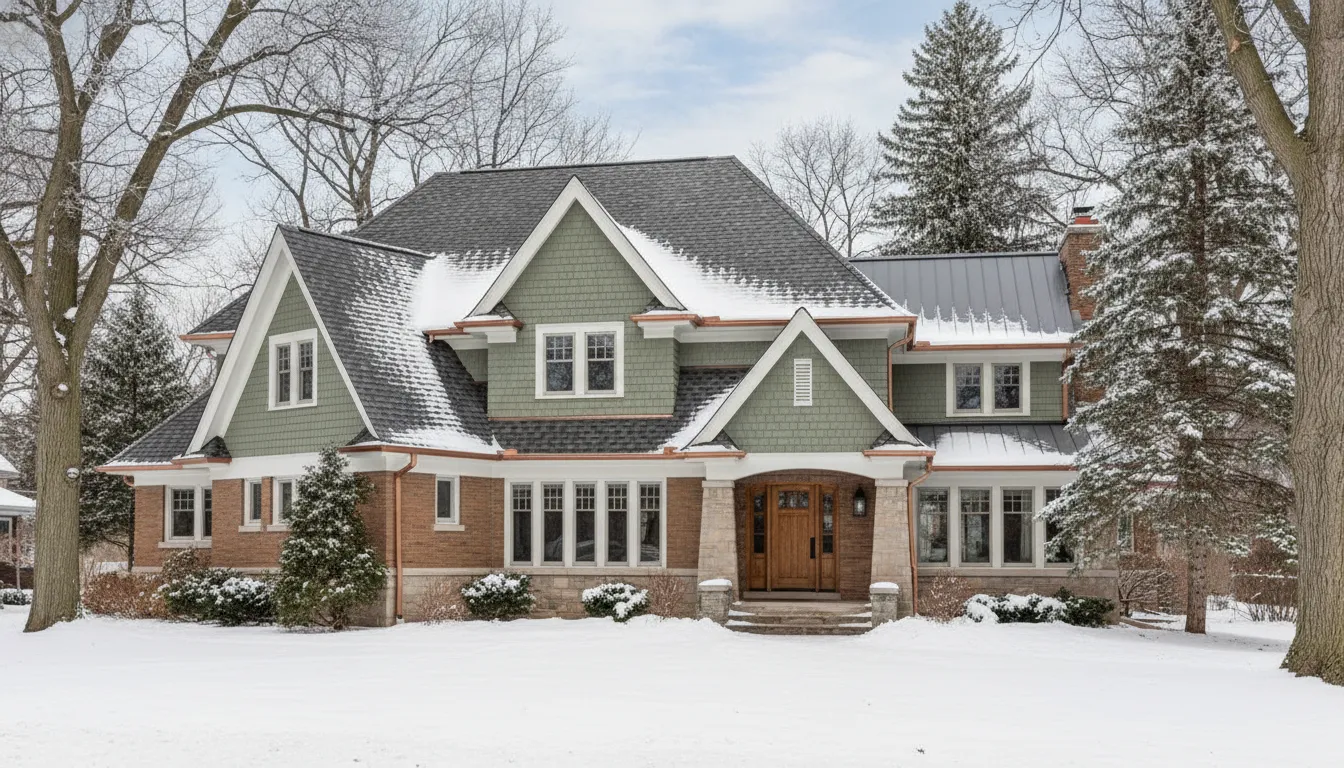
The best roofing materials for homes depend on roof pitch, structural capacity, Wisconsin weather exposure, ventilation, appearance, and maintenance goals. Asphalt shingles are a practical option for many houses, while metal, tile, slate, wood, or synthetic materials may fit specific designs and project conditions. A professional assessment can narrow the choices without treating one material as right for every roof.
Ready to plan your project? Request a FREE estimate today!
Before comparing individual materials, it helps to understand how Wisconsin weather changes the demands placed on a roof. That context makes it easier to evaluate drainage, ventilation, ice-dam risk, and material compatibility for a Milwaukee-area home.
How Wisconsin Weather Changes the Best Roofing Materials for Homes
Milwaukee’s winter conditions make roof selection a system decision, not simply a choice based on color or appearance. Snow accumulation, repeated freeze-thaw cycles, roof pitch, attic conditions, and drainage all influence how well a covering can protect the structure. The best roofing materials for homes are the ones that fit the roof design and the way the building manages moisture.
Start with snow, ice, and the roof system
Ice dams form when snow melts during the day and refreezes at the colder eaves. The resulting ice can block drainage and allow meltwater to move beneath shingles and into the attic or walls. The National Weather Service explains this process in its ice dam guidance. A material choice alone will not correct an attic that is losing heat or a roof edge that cannot drain properly.
Roof pitch also matters. A steeper slope may shed snow and water differently than a low-slope section, while valleys, dormers, and roof-to-wall intersections create additional areas for water to collect. During an assessment, the contractor should consider the existing deck, flashing, underlayment. And the covering’s compatibility with the roof’s geometry rather than applying one material recommendation to every home.
Attic insulation and ventilation deserve equal attention. The National Weather Service notes that attic insulation should be at least R-30. With R-38 preferred in northern climates, and that airflow can help keep attic air cold enough to reduce freeze-thaw cycling. PNNL identifies snow, freezing temperatures, and a poorly air-sealed or insulated attic as conditions that contribute to ice dams. Clear gutters and downspouts also help melting snow drain away.
For a Wisconsin project, ask how the proposed material, roof pitch, ventilation plan, flashing details, and drainage strategy work together. A professional review of Milwaukee roofing installation options can help connect the material shortlist to the actual structure and exposure.
Are Asphalt Shingles a Practical Choice for Milwaukee Homes?
Asphalt shingles remain a practical starting point for many Milwaukee homes because they offer familiar installation methods, broad design flexibility, and options for different roof styles. The USDA Forest Service identifies asphalt shingles as the most common roofing material for residential buildings. Their basic construction uses a mat saturated with asphalt and covered with mineral granules. Creating a finished surface that can be evaluated alongside the home’s pitch, ventilation, exposure, and drainage needs.
Choosing between shingle formats and base materials
Three-tab shingles have individual tabs and slots that provide stress relief as the material expands and contracts. Their regular pattern creates a simpler appearance. Architectural shingles use a heavier base mat with additional mats or sections. The layered profile produces shadow lines and more visual character, which can better complement homes where roof appearance is a prominent design feature. The USDA Forest Service describes architectural shingles as heavier and more durable than three-tab shingles, but that does not make one format automatically right for every roof.
Asphalt shingles are available with organic or fiberglass bases. Organic shingles are more flexible in cold weather, while fiberglass shingles have a better fire rating, according to the USDA Forest Service. Those differences are useful decision points, but the final selection should also account for the existing roof assembly, installation requirements, attic conditions, and the home’s overall exposure.
For a closer look at the tradeoffs, review our guide to asphalt shingles in Milwaukee. A roofing assessment can then determine whether this familiar material fits the structure and the owner’s priorities, or whether another option deserves consideration.
When Does Metal Roofing Make Sense?
Metal roofing can be a strong candidate when a Milwaukee homeowner wants a roof that supports a clean. Defined design and is willing to plan carefully around the home’s structure, ventilation, and exposure. It is not automatically the best choice for every roof. The right decision depends on how the roof sheds snow, how the material works with existing details, and how the finished surface fits the home’s appearance.
Match the metal system to the home
Metal roofing is available in vertical panels, as well as shingles made to resemble slate, tile, or shake. That gives homeowners a choice between a distinctly modern panel appearance and a more textured, traditional look. A contractor should also review roof pitch and layout. Steeper, uncomplicated roof planes may encourage snow to shed, while valleys, dormers, additions, and lower-slope areas require more detailed planning for drainage and flashing.
Ask how the proposed system will handle corrosion exposure, fasteners, seams, and contact with other metals. Underlayment matters as well, especially where the roof assembly must manage moisture and seasonal temperature changes. Metal expands and contracts, so the installation method should account for movement instead of treating panels like a rigid, unchanging surface.
Maintenance is not limited to looking at the metal itself. Gutters, valleys, penetrations, flashing, attic ventilation, and insulation all affect how the roof performs as part of the building. The National Weather Service recommends clear gutters and downspouts so melting snow can drain, while proper attic airflow helps limit freeze-thaw cycling. Those details matter regardless of the selected roofing material.
A roofing assessment should confirm that the existing structure can support the selected assembly and that the material is compatible with the home’s design and weather exposure. JM Remodeling’s roofing evaluations consider structural integrity, ventilation, material compatibility, and Wisconsin weather protection before an estimate is prepared.
How Do Wood, Slate, Tile, and Synthetic Roofs Compare?
Beyond asphalt and metal, homeowners can consider materials that create a distinctive appearance or solve a particular design need. These options require more planning because roof structure, pitch, detailing, local exposure, and maintenance access can affect whether they are appropriate. The Milwaukee roofing installation options available for a property should be evaluated as part of the whole roof system, not by material name alone.
| Material. | Strengths. | Planning questions. |
|---|---|---|
| Wood. | Natural texture and character. | Maintenance, moisture, fire requirements. |
| Slate. | Distinctive, stone appearance. | Structural support and specialist installation. |
| Clay tile. | Weather, fire, and insect resistance. | Weight, pitch, profile, and freeze-thaw detailing. |
| Cementitious tile. | Resists weathering, insects, fire, and fungus. | Structural capacity and installation details. |
| Synthetic. | Can echo slate, wood, or tile styling. | Product documentation, appearance, and compatibility. |
Clay tile is kiln-fired and described by the USDA Forest Service as weather-resistant, fireproof, and insect-proof. Profiles can be barrel-shaped or flat, with multiple color choices. Cementitious tile is a masonry material that resists weathering, insects, fire, and fungus, while its weight can help resist wind uplift. Review the USDA Forest Service roofing material guidance for these material characteristics.
Wood, slate, and synthetic products should likewise be treated as conditional choices. A site assessment should confirm that the structure, roof geometry, ventilation, flashing, and drainage details can support the selected system. The best roofing materials for homes are the ones that fit those conditions, the property’s appearance, and the owner’s willingness to maintain them.
What Should You Check Before Choosing a Roofing Material?
The right roof material has to work with the house, not just look appealing in a sample. Before comparing colors or profiles, ask for an evaluation of the roof structure, pitch, ventilation, drainage, and existing layers. JM’s roofing assessment considers structural integrity, ventilation, material compatibility, and weather protection for Wisconsin’s climate. You can also review Milwaukee roofing installation options before narrowing your list.
Use this checklist during your roof consultation
- Structure and pitch: Can the roof framing support the selected material, and is the slope appropriate for its installation requirements? A heavier option may require a closer structural review.
- Ventilation and insulation: Ask how intake and exhaust ventilation, attic insulation, and air sealing will work together. Poor attic airflow can contribute to freeze-thaw cycling and ice-dam conditions.
- Flashing and drainage: Confirm how valleys, chimneys, skylights, walls, eaves, gutters, and downspouts will be detailed. A sound material cannot compensate for weak water-management details.
- Weather documentation: Ask what wind, impact, and fire documentation applies to the exact product. Nationwide recommends asking about wind-test benchmarks such as ASTM D3161 or ASTM D7158, along with impact ratings. Treat these as questions for product review, not guarantees about any specific material.
- Compatibility and maintenance: Check whether the new roof works with existing sheathing, flashing, ventilation components, and adjacent siding. Discuss inspection access, cleaning, repairs, and replacement of related components.
- Appearance and scope: Compare color, texture, profile, and visibility from the street. Then request a written scope identifying tear-off, deck repairs, ventilation work, flashing, cleanup, permits, code responsibilities, warranty coverage, and maintenance expectations.
A detailed review helps separate a material that fits the property from one that only looks good in a product photo. When you are ready to compare replacement approaches, explore Milwaukee roof replacement services and bring these questions to the estimate.
How to Plan a Roofing Estimate in Southeastern Wisconsin
A useful estimate should explain more than a material choice. It should show how the roof, attic, drainage system, and project scope work together in a Milwaukee-area climate. Use this process to prepare for a productive conversation with a roofing contractor:
- Start with an on-site inspection. Ask the contractor to review the roof surface, flashing, penetrations, gutters, roof edges, and visible signs of moisture. The inspection should also consider structural integrity and any recurring leaks, rather than assuming that a new covering will solve every problem.
- Build a practical material shortlist. Discuss roof pitch, appearance, maintenance expectations, exposure to wind and snow, and compatibility with the existing structure. If you are comparing shingles, metal, tile, or synthetic options. Ask which choices are appropriate for the home instead of assuming that the most expensive-looking option is the best fit.
- Review structure, insulation, and ventilation. In cold climates, attic airflow and insulation affect how the roof handles freeze-thaw conditions. The National Weather Service recommends at least R-30 attic insulation, with R-38 preferred in northern climates, but the right correction depends on the building. Ask whether air sealing, ventilation, or structural work belongs in the scope.
- Confirm drainage and weather details. Ask how the proposal addresses valleys, eaves, flashing, downspouts, and areas where snow or meltwater may collect. You can also ask whether proposed shingles have documented wind-test or impact ratings, such as the benchmarks discussed by Nationwide.
- Request a written, project-specific scope. The bid should identify materials, preparation, ventilation or structural work, cleanup, estimated timing, and warranty coverage. JM Remodeling uses in-house crews, including roofers, and holds CertainTeed Master Shingler Installer certification. That in-house coordination can make it easier to clarify which trade handles each part of the work.
- Ask maintenance and next-step questions. Before approving the project, confirm how to maintain the selected roof, what signs require attention, and whom to contact if conditions change. For Milwaukee roof replacement services, request a free estimate that reflects your property’s actual condition and priorities.
Ready to discuss your roofing project? Request a free estimate from JM Remodeling for your Southeastern Wisconsin property.
Repair or Replacement: Which Roofing Path Fits?
A roof problem does not automatically mean the entire roof needs to be replaced. The right next step is a professional inspection that considers the location, extent, and likely source of the damage. A small area of storm damage, failed flashing, or an isolated penetration may call for targeted repair. By contrast, widespread wear, repeated leaks, or materials that are failing across multiple roof slopes may point toward a larger project.
What an inspection should evaluate
Recurring leaks deserve more than another surface patch. Water can travel beneath roofing materials before it appears inside, so the visible stain may not identify the actual entry point. In Milwaukee and Southeastern Wisconsin, an assessment should also consider freeze-thaw exposure and ice-dam risk. The National Weather Service explains that melting snow can refreeze at cold eaves and allow water beneath shingles, where it may damage ceilings and walls. Learn more about ice dams and roof drainage.
Look for an evaluation of the roof deck and supporting structure, ventilation, insulation, flashing, valleys, penetrations, gutters, and drainage paths. Ventilation or water-management problems can continue affecting a new roof if they are left unaddressed. Material compatibility matters as well, particularly when tying new work into existing sections.
JM Remodeling’s in-house roofing team can help property owners compare a localized repair with broader Milwaukee roofing installation options. The goal is not to force one outcome, but to define the scope clearly and select a solution that fits the roof’s condition, structure, appearance, and maintenance needs.
Frequently Asked Questions
What is the best roof covering for a house in Milwaukee?
There is no single best choice for every home. Asphalt shingles are a practical starting point for many homeowners, while metal, tile, slate, wood, and synthetic products may fit specific goals. The right selection depends on roof pitch, structural capacity, ventilation, exposure, appearance, maintenance expectations, and how the material works with the existing roof and flashing.
What are the top roofing materials for Southeastern Wisconsin homes?
Common options include asphalt shingles, metal roofing, clay or concrete tile, slate, wood, and synthetic roofing products. Asphalt offers broad residential familiarity and multiple appearance options. Metal can be installed as panels or in styles that resemble other materials. Tile and slate can create a distinctive look, but their weight and installation requirements make structural review especially important.
Which roofing materials handle Wisconsin snow and ice best?
Material selection matters, but snow and ice performance also depends on the roof system. Ice dams form when snowmelt refreezes near cold eaves, and meltwater can move beneath shingles into the attic and walls. The National Weather Service recommends addressing attic insulation, air sealing, ventilation, and drainage as part of ice-dam prevention: NWS ice-dam guidance. A contractor should assess these conditions before recommending a covering.
What should I ask during a roofing estimate?
Ask how the contractor will evaluate the roof deck, structure, pitch, ventilation, flashing, drainage, and material compatibility. You can also request the proposed material specifications, installation scope, maintenance requirements, warranty terms, and any wind or impact documentation that applies. A detailed, project-specific bid makes it easier to compare options without relying on unsupported price or lifespan assumptions.
Ready to Plan the Right Roofing Material?
The best roofing choice depends on your home’s structure, ventilation, exposure, and project goals. JM Remodeling can help you review those factors and plan a practical next step for your Milwaukee-area property. Request a FREE estimate today for roofing material guidance and project planning, or call 414.354.2800 to speak with the team.